skip to main | skip to sidebar
Reflective Online Teaching
My Personal Site for Reflective Teaching
RSS
    Jonathan Acuña Solano, Post Author
    Contact Email: jonacuso@gmail.com

Teaching, the Humble Art of Helping

Laureate Educator, Teaching 0 comments


Teaching, the Humble Art of Helping
Education can be seen as the combination of two key elements that assist the creation of knowledge: 50 % teaching + 50% learning = knowledge. However, how can we have students access the whole 100%? At this point is where the teaching professional turns into a “humble artisan” that will lead his apprentice to achieve a goal, knowledge.


Like the artisan that plans the execution of his art pieces, the teacher guides his student through the learning process. Along the process (i.e. a lesson), the instructor can spot the difficulties a student has and then find a way to help the student overcome that hardship. Likewise, the teacher can identify what the strengths the student has to help him/her develop them much more. To sum up, the identifiable mistakes along with his/her strengths can be of great help to deepen and achieve the course contents and objectives.


The planning of a course takes another color shade in helping students learn. Part of the course planning should include the creation of a class culture that can allow student on-going learning, class after class. A good class culture can host a great deal of debate and exchange of ideas with a teacher-moderator. This healthy way of exchanging ideas can contribute greatly to the creation of a hearty PLN (Personal Learning Network) for each single student in a course.
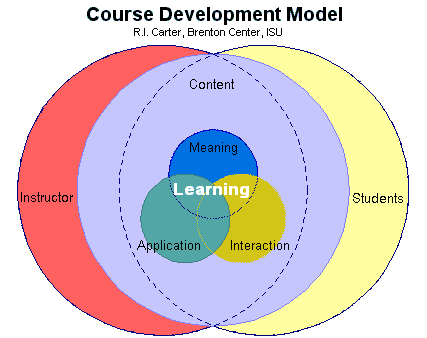

If teaching is the humble art of helping students to create their knowledge, by making good use of the key components of a good teacher, we all can trigger some good meaningful and ever-lasting learning in each one of our students in the classroom.

Jonathan Acuña
Universidad Latina
Costa Rica

Extra links on What Makes a Good Teacher are these:
http://sabes.org/resources/publications/adventures/vol12/12hassett.htm
http://www.teachingenglish.org.uk/talk/video-discussion/what-makes-a-good-teacher
http://www.ln.edu.hk/tlc/learning_matters/12-2003-482003.pdf
http://www.ripplesofimprovement.com/the-top-10-qualities-of-a-good-teacher/


Saturday, December 18, 2010



0 responses to "Teaching, the Humble Art of Helping"


Post a Comment

Newer Post Older Post Home
View mobile version
Subscribe to: Post Comments (Atom)

    Reflective Online Teaching

    Reflective Online Teaching
    Since 2010

    Visitors

    Costa Rica

    Costa Rica
    My Home Country

    500 Pots and counting

    500 Pots and counting

    TESOL Certified Instructor

    TESOL Certified Instructor

    Certified Virtual Instructor

    Certified Virtual Instructor

    PD Talks & NCTE-Costa Rica

    PD Talks & NCTE-Costa Rica

    Copyscape

    Protected by Copyscape

    Labels

    • #EdChat (8)
    • #LTTO (14)
    • A Princess of Mars (1)
    • A Tale of Two Cities (1)
    • A Woman fo No Importance (1)
    • A1 Learners (1)
    • ABLA (9)
    • Academic Integrity (1)
    • Academic Research (9)
    • Adaptive Learning (1)
    • ADDIE Model (7)
    • Adventure Fiction (1)
    • Afro-Caribbean Lore (1)
    • Agile Professional Development (1)
    • AI Detection (1)
    • AI Ethics (1)
    • AI in ELT (1)
    • Aldous Huxley (1)
    • Aldus Huxley (1)
    • Alexander Luria (5)
    • Algorithmic Bias (2)
    • Anansi (1)
    • Andragogy (5)
    • Andy Curtis (1)
    • Angelology (1)
    • Animal-Machine (1)
    • Aouda (1)
    • Apps for Education (1)
    • Archetypes (1)
    • Artificial Intelligence (2)
    • Artistic Philosophy in ELT (1)
    • Assessment (12)
    • Assessment in Action (2)
    • Assessment Literacy (1)
    • Assessment Practices (6)
    • ASSURE (1)
    • Asynchronous Tools (2)
    • Attention Span (1)
    • Augustine (1)
    • Aural/oral skills (1)
    • autonomous learning (1)
    • Barthesian Analysis (6)
    • Behavior (1)
    • Being vs. Having (1)
    • Benjamin Button (1)
    • Bergson (1)
    • Betrayal (1)
    • Bettelheim (1)
    • Biblical Monotheism (1)
    • Biblical Text Analysis (1)
    • Big Data (6)
    • Bilingualism (1)
    • Blended Learning (1)
    • BlendIt Course (8)
    • Bloom's Taxonomy (5)
    • BNCs (9)
    • Book Critique (2)
    • Book of Job (1)
    • Bookmarking Sites (1)
    • Brave New World (1)
    • Bureaucracy (2)
    • Burnout Prevention (1)
    • Cain (1)
    • Carl Jung (2)
    • Case Study (4)
    • Catalog of Rubrics (1)
    • Catholic Storytelling (1)
    • CEF (2)
    • CEFR-Aligned Assessment (1)
    • Centro Universitario de Desarrollo Intelectual (1)
    • Character Analysis (2)
    • Character Development (1)
    • Charles Dickens (1)
    • Christian Demonology (1)
    • Classroom Management (2)
    • Classroom Practice (1)
    • Cloud Reader (1)
    • CLT (1)
    • Coaching (1)
    • Coaching in Teacher Classroom Observation (2)
    • Code of Ethics (1)
    • Cognitive Load (1)
    • Colombian Poetry (1)
    • Color Motifs (1)
    • Communicating about Uncertainty (1)
    • Communicative Competence (1)
    • Communicative Language Teaching (3)
    • Communities of Practice (1)
    • Community of Practice (8)
    • Comparative Mythology (1)
    • Comparative Religion (2)
    • Competency-Based Learning (9)
    • Conformity (1)
    • Conformity Pressure (1)
    • Connectivism (1)
    • Constructive Alignment (1)
    • Constructivism (1)
    • Content Assimilation (1)
    • Content Design (1)
    • CoP (3)
    • Costa Rica (2)
    • Costa Rican Literature (1)
    • Course Project (2)
    • critical skills (1)
    • Critical Thinking Skills (2)
    • Cultural Allegory (1)
    • Cultural Assimilation (1)
    • Cultural Centers (1)
    • Culture (11)
    • Culture Framework (2)
    • Culture Teaching (8)
    • Curriculum Design (3)
    • Curriculum Development (6)
    • Custom Training (1)
    • Dante Alighieri (2)
    • Dante Studies (2)
    • Data Science (7)
    • Data-Driven Teaching (5)
    • Data-Informed Leadership (1)
    • David Fincher (1)
    • DDT (1)
    • Deborah Tannen (1)
    • Deductive Grammar Instruction (2)
    • Deep Ecology (1)
    • Dehumanization (1)
    • Demonology (2)
    • Demonology and Devil-Lore (2)
    • Deontology (1)
    • Desire (1)
    • Developmental Feedback (1)
    • Diane Larsen-Freeman (1)
    • Didactics (4)
    • Digital Inequality (1)
    • Digital Pedagogy (1)
    • Dino Buzzati (1)
    • Discourse Analysis in ELT (1)
    • Distance Education (2)
    • Dualism (1)
    • Dystopia (1)
    • Dystopian Society (1)
    • E-Portfolios (1)
    • Eco-Criticism (1)
    • Edgar Rice Burroughs (1)
    • Education and Learning (34)
    • Education Policy (2)
    • Education Technologies (9)
    • Educational Evolution (1)
    • Educational Leadership (1)
    • Educational Philosophies (1)
    • EFL/ESL Activities (1)
    • El Clis de Sol (1)
    • eLearning (1)
    • Electracy (1)
    • ELF (1)
    • ELL (17)
    • Elohim (3)
    • ELT (42)
    • ELT Conference (1)
    • ELT Institutions (1)
    • ELT Leadership (1)
    • ELT Professional Development (1)
    • ELT. Teacher Growth (1)
    • Emotional Intelligence (1)
    • Emotional Literacy (1)
    • English Grammar (3)
    • English Language Teaching (2)
    • English Teaching (1)
    • Enkidu (1)
    • Environmental Destruction (1)
    • Environmental Philosophy (1)
    • Envy (1)
    • Eric Mazur (1)
    • Erich Fromm (4)
    • Escape from Freedom (1)
    • Esotericism (1)
    • ESP (2)
    • Ethical Judgments (1)
    • Ethics (43)
    • Ethics Analysis (2)
    • Etiological Storytelling (1)
    • Evaluating Digital Tools (1)
    • Evaluation (4)
    • Evil (1)
    • Executives' School (9)
    • Ezekiel (1)
    • F. Scott Fitzgerald (1)
    • Fairy Tales (2)
    • Faivre (1)
    • False Positives (1)
    • Fear (1)
    • Feedback (5)
    • Flipped Classroom (1)
    • Flipped Learning (1)
    • Formative Assessment (4)
    • Forums (1)
    • Frames-Based Teaching (1)
    • Framing in Discourse (1)
    • Frankenstein (1)
    • Franz Kafka (1)
    • Freudian Analysis (3)
    • From theory to practice (2)
    • Frommian Analysis (2)
    • Future for Education? (2)
    • Gabriel Escorcia Gravini (1)
    • Gamification (1)
    • George Orwell (1)
    • Global Competence (1)
    • Global Ethics (7)
    • Gnosticism (1)
    • Gothic Literature (1)
    • Grading Ranges (1)
    • Grammar (3)
    • Guest Author (1)
    • Guided Practice (2)
    • H. G. Wells (1)
    • H.P. Lovecraft (3)
    • Haiku (2)
    • Hanegraaff (1)
    • HD Brown (1)
    • Hebrew Mythology (1)
    • Hermeticism (2)
    • Higher Education (49)
    • Higher Education Ethics (1)
    • History (2)
    • Homerton College Cambridge Course (2)
    • Hootcourse (1)
    • Human Dignity (1)
    • Human Rights (1)
    • Human-Centered Pedagogy (1)
    • Hybrid and Blended Learning (61)
    • Hybrid In-person Teaching (1)
    • Hybrid Learning Models (1)
    • Ideology (1)
    • Idioms (1)
    • Iktomi (1)
    • Imagery (1)
    • Independent Practice (1)
    • Individuation (1)
    • Inductive Grammar Instruction (2)
    • Inferno XXXIII (1)
    • infographic (1)
    • Institutional Culture (1)
    • Institutional Improvement (1)
    • Instructional Design (3)
    • Integration of Technology into Teaching (10)
    • Interventions in ELL (1)
    • Irony (2)
    • Isaac Asimov (1)
    • Italian Literature (1)
    • Jacques de Molay (1)
    • Jacques Lacan (4)
    • James Knowles (1)
    • James Thurber (1)
    • Japanese Folklore (1)
    • Jehovah (1)
    • Jeremiah (1)
    • Jewish Mysticism (1)
    • JotForm (1)
    • Journey to the Center of the Earth (1)
    • Jules Verne (3)
    • Jungian Analysis (7)
    • Just-in-Time Training (1)
    • Kabbalah (1)
    • Kahlil Gibran (2)
    • Kathleen M. Bailey (1)
    • King Arthur and his knights (1)
    • Kirkpatrick Model (13)
    • Knight Templars (1)
    • La gran miseria humana (1)
    • Lacan (1)
    • Lacanian Analysis (7)
    • Language (1)
    • Language Competences (1)
    • Language Education (2)
    • Language Learning (14)
    • Language Series Comparative Analysis (1)
    • Language Teaching (8)
    • Latin American Literature (1)
    • Laureate Course Module 3 Teaching with Technology (19)
    • Laureate Educator (4)
    • Laureate Educator in the XXI Century (2)
    • Laureate Educator-Week 1 (1)
    • Laureate Educator-Week 2 (1)
    • Laureate Educator-Week 3 (1)
    • Leadership (9)
    • learner autonomy (1)
    • Learner-Centeredness (1)
    • Learning (8)
    • Learning Activities (1)
    • Learning Analytics (1)
    • Learning Objectives (2)
    • Learning Preferences (1)
    • Learning Styles (1)
    • Learning Technologies (1)
    • Leopoldo Lugones (1)
    • Les Demoiselles d’Avignon. Pablo Picasso (1)
    • Lesson Design (2)
    • Lesson Planning (6)
    • Lev Vygotsky (4)
    • Libraries (1)
    • Life is a Dream (1)
    • Life Stories (1)
    • Linguistics (2)
    • Listening (1)
    • Literary Analysis (2)
    • Literary Criticism (23)
    • Literature (35)
    • LMS (6)
    • Lord’s Prayer (1)
    • LOTI Profile (5)
    • Love (2)
    • Magón (1)
    • MakerSpace (1)
    • Manuel González Zeledón (1)
    • Marcel Duchamp (6)
    • Marxist Literary Approach (1)
    • Mary Shelly (1)
    • Materials Design (1)
    • Meaning of Justice (1)
    • Mentalism (1)
    • Mentorship (1)
    • MEP (Ministerio de Educación Pública) (1)
    • Metacognition (3)
    • Metadata (1)
    • Metaphysics. Self-Mastery (1)
    • Methodology (3)
    • microcelebrities (1)
    • Microlearning (1)
    • Mind Maps (2)
    • Mindfulness (12)
    • Misogyny (1)
    • Mixed-Methods Research (4)
    • Mobile Learning (1)
    • Modeling in ELT (1)
    • Modern Realism (1)
    • Modular Learning (1)
    • Moncure Daniel Conway (5)
    • MOOCs (1)
    • Moodle (5)
    • Moral Allegory (1)
    • Moral Cannibalism (1)
    • Moral Lesson (1)
    • Moral Responsibility (1)
    • Moral Theology (2)
    • Moral-Humanistic Criticism (1)
    • Motivation (2)
    • Music and Learning (1)
    • Myth of Evil (1)
    • Mythological Archetypes (1)
    • Mythology (1)
    • Narrative Structure (2)
    • Nature Spirits (1)
    • Necropolitics (1)
    • Needs Assessment (3)
    • Netiquette (1)
    • Network Community (1)
    • NGL (1)
    • Nicaraguan Literature (1)
    • Nicatesol (1)
    • Nietzsche (1)
    • Nive Events of Instruction (1)
    • Nonviolent Communication (6)
    • ñor Cornelio Cacheda (1)
    • Nouns in English (1)
    • Novice Teachers (2)
    • Nudos (1)
    • Objective Writing (1)
    • OER (1)
    • Off-the-Shelf Learning (1)
    • Online Community (1)
    • Online Instruction (55)
    • online learning (44)
    • Online Learning Programs (1)
    • Online Persona (9)
    • Online Program Design (1)
    • online teaching (4)
    • Online Teaching Approach (1)
    • Online Teaching Practices (72)
    • Oral Assessment (1)
    • Oral Communication (1)
    • Oral Skills (2)
    • Organizational Learning (1)
    • Orientalism (1)
    • Oscar Wilde (1)
    • Padre Luis Coloma (1)
    • Paper.li (1)
    • Passepartout (1)
    • Pater Noster (1)
    • Paul of Tarsus (1)
    • Paz a los muertos! (1)
    • PBL (1)
    • PD (1)
    • Peace to the Dead! (1)
    • Pedagogy (2)
    • Pedro Calderón de la Barca (1)
    • Peer Instruction (1)
    • Penitence (1)
    • Penny Ur (2)
    • Personal Learning Networks (2)
    • Phileas Fogg (1)
    • Philosophy (1)
    • Phonemics (4)
    • Phonetics (4)
    • Phonotactics (3)
    • Pilot Programs (1)
    • PLEs and PLNs for Lifelong Learning Competencies Week 1 (1)
    • Plot Analysis (1)
    • Poetry (2)
    • Poetry Analysis (1)
    • Political Discourse (1)
    • Popol Vuh (1)
    • Postcolonialism (1)
    • Posthumanism (1)
    • Pride (1)
    • Procrustean Syndrome (1)
    • Produsage (1)
    • Produser (1)
    • Professional Capital (1)
    • Professional Competencies (1)
    • Professional Development (9)
    • Professional Growth (1)
    • Projec-Based Learning (1)
    • Promethean Myth (1)
    • Pronunciation (7)
    • Psychoanalysis (2)
    • Psychological Analysis (1)
    • Psychological Resilience (1)
    • Psychology (1)
    • Public Speaking (1)
    • Purgatorio XI (1)
    • Qualitative Research (4)
    • Quantitative Research (4)
    • rationality (1)
    • Reading (1)
    • Reading and Vocabulary (2)
    • Recruitment (1)
    • Recycling in Education (1)
    • Reflective Communities (1)
    • Reflective Evaluation (2)
    • Reflective Journaling (5)
    • Reflective Practice (9)
    • Reflective Reading (1)
    • Reflective Teacher Communities (1)
    • Reflective Teaching (59)
    • Religious Evolution (1)
    • Research (9)
    • Resilience (1)
    • Richard Schmidt (2)
    • Risk Communication (1)
    • Robert Frost (1)
    • Robert Gagné (2)
    • Roland Barthes (3)
    • RTC (1)
    • Ruben Puentedura (1)
    • Rubric-Based Planning (1)
    • Rubrics (3)
    • Samael (1)
    • SAMR Model (1)
    • Scaffolding (1)
    • Schema (1)
    • Scholasticism (1)
    • Science Fiction Studies (1)
    • Scoop.it! (1)
    • Second Language Acquisition (4)
    • Secret Societies of the Middle Ages (1)
    • Semiotics (2)
    • Sentence Patterns (1)
    • Shadow (1)
    • Short Films (1)
    • Short Stories (4)
    • Short Story Analysis (1)
    • Sioux Legends (3)
    • Sir Gareth (1)
    • Sir Gawain (1)
    • Sir Lancelot (1)
    • Sir Tristam (1)
    • Sketchpads (1)
    • Skill Gap Analysis (1)
    • SLA (3)
    • Social Criticism (1)
    • Social Media (29)
    • Social Networking in Education (3)
    • Speaking (1)
    • Speaking Scenarios (1)
    • Stephen Krashen (1)
    • Sticky Curriculum (1)
    • Storytelling (1)
    • Strategies for online teaching (2)
    • Student Agency (1)
    • Student Assessment (1)
    • Student Engagement (1)
    • Student Interest (3)
    • Student Motivation (1)
    • Student Tips (2)
    • Sumerian (1)
    • Summative Assessment (2)
    • Supervision (1)
    • Sustainability (1)
    • Symbolic Philosophy (1)
    • Symbolism (2)
    • Syntax (2)
    • Task-Based Instruction (1)
    • Task-Based Language Teaching (1)
    • Task-Based Learning (1)
    • TBI (1)
    • TBLT (1)
    • Teacher Agency (1)
    • Teacher Development (23)
    • Teacher Evaluation (2)
    • Teacher Feedback (2)
    • Teacher Identity (1)
    • Teacher Inquiry (1)
    • Teacher Mentoring (2)
    • Teacher Mentorship (1)
    • Teacher Observation (1)
    • Teacher Professional Development (1)
    • Teacher Training (5)
    • Teacher Well-being (4)
    • Teaching (47)
    • Teaching Adolescents (1)
    • Teaching ePortfolio (1)
    • Teaching Grammar (2)
    • Teaching Models (1)
    • Teaching Online (9)
    • Teaching Philosophy (4)
    • Teaching Portfolio (1)
    • Teaching Practices (49)
    • Teaching Practicum (22)
    • Teaching Presence (2)
    • Teaching Styles (8)
    • Teaching Tips (9)
    • Teaching With Technology (4)
    • Teaching With Technology-Week 1 (1)
    • Teaching With Technology-Week 2 (1)
    • Teaching With Technology-Week 3 (2)
    • Teaching With Technology-Week 4 (4)
    • Teaching With Technology-Week 5 (3)
    • Teaching With Technology-Week 6 (2)
    • Teaching With Technology-Week 7 (3)
    • Teaching With Technology-Week 8 (2)
    • Teaching With Technology-Week 9 (1)
    • Tech Tip (5)
    • Technocriticism (1)
    • Technological Assessment (2)
    • Technology Use Tips (1)
    • Templars (1)
    • Temporality (1)
    • Testing (1)
    • The Art of Loving (1)
    • The Assassins (1)
    • The Book of Proverbs (1)
    • The Butterfly Circus (1)
    • The Cats of Ulthar (1)
    • The Data Scientist (5)
    • The Epic of Gilgamish (1)
    • The Kybalion (2)
    • The Loincloth (1)
    • The New Normal (1)
    • The Noticing Hypothesis (2)
    • The Outsider (1)
    • The Prophet (2)
    • The Real (1)
    • The Road Not Take (1)
    • The Time Machine (1)
    • Theater Criticism (1)
    • Theophoric Names (1)
    • Thomas Keightley (2)
    • Thomistic Ethics (1)
    • Thomistic Grace (1)
    • Tolkien (1)
    • Trickster (1)
    • Trinity (1)
    • Turnitin (1)
    • UCC (1)
    • Ugarit (1)
    • Ugolino (1)
    • Universidad Mariano Gálvez (2)
    • Utilitarianism (1)
    • Vengeance (1)
    • Videoconferencing Platforms (1)
    • Virtual Classroom Features (1)
    • Virtual Learning Environments (8)
    • Virtual Teaching (5)
    • Virtualized Teaching (1)
    • Visual Literacy (1)
    • VLE (47)
    • VLEs (38)
    • Vocabulary learning (10)
    • WAS (14)
    • Web 2.0 (4)
    • Web search engine options (1)
    • Web Tools (6)
    • WebQuests (1)
    • Western Esotericism (1)
    • Western Mysticism (1)
    • Wilbert Salgado (10)
    • William Elliot Griffis (1)
    • Working Adult Student (5)
    • Workplace Dynamics (1)
    • writing (2)
    • Writing Skills (1)
    • Yahweh (1)
    • Yzur (1)
    • Zecharia Sitchin (1)
    • ZPD (1)

    Blog Archive

    • ►  2025 (77)
      • ►  December (6)
      • ►  November (12)
      • ►  October (11)
      • ►  September (10)
      • ►  August (8)
      • ►  July (7)
      • ►  June (6)
      • ►  May (3)
      • ►  April (4)
      • ►  March (6)
      • ►  February (2)
      • ►  January (2)
    • ►  2024 (28)
      • ►  December (3)
      • ►  November (2)
      • ►  October (4)
      • ►  September (4)
      • ►  August (5)
      • ►  July (3)
      • ►  June (2)
      • ►  May (2)
      • ►  April (3)
    • ►  2023 (6)
      • ►  September (1)
      • ►  August (5)
    • ►  2022 (1)
      • ►  July (1)
    • ►  2020 (54)
      • ►  November (4)
      • ►  October (7)
      • ►  September (11)
      • ►  August (15)
      • ►  July (10)
      • ►  April (2)
      • ►  March (5)
    • ►  2019 (13)
      • ►  August (5)
      • ►  July (8)
    • ►  2018 (11)
      • ►  June (2)
      • ►  May (7)
      • ►  April (2)
    • ►  2017 (6)
      • ►  May (2)
      • ►  April (2)
      • ►  January (2)
    • ►  2016 (101)
      • ►  November (4)
      • ►  October (7)
      • ►  September (10)
      • ►  August (4)
      • ►  May (22)
      • ►  April (17)
      • ►  March (21)
      • ►  February (14)
      • ►  January (2)
    • ►  2015 (53)
      • ►  November (5)
      • ►  October (13)
      • ►  August (4)
      • ►  July (8)
      • ►  June (5)
      • ►  May (14)
      • ►  April (4)
    • ►  2014 (40)
      • ►  October (5)
      • ►  September (11)
      • ►  August (4)
      • ►  June (3)
      • ►  May (8)
      • ►  April (5)
      • ►  February (1)
      • ►  January (3)
    • ►  2013 (46)
      • ►  December (1)
      • ►  November (1)
      • ►  October (3)
      • ►  September (5)
      • ►  August (6)
      • ►  July (7)
      • ►  June (6)
      • ►  May (7)
      • ►  April (1)
      • ►  March (4)
      • ►  February (3)
      • ►  January (2)
    • ►  2012 (17)
      • ►  December (3)
      • ►  November (4)
      • ►  October (4)
      • ►  September (6)
    • ►  2011 (5)
      • ►  September (2)
      • ►  August (2)
      • ►  January (1)
    • ▼  2010 (46)
      • ▼  December (9)
        • Teaching, the Humble Art of Helping
        • If I Had a VLE for my Courses, ...
        • Useful Moodle Features in VLE
        • Week 9: My Ideal Pronunciation Class
        • Week 3: How to Become a Good Leaner throughout Life
        • Week 8: My PLN (Personal Learning Network)
        • Week 8: Integrating Technology into College EFL Cl...
        • Week 7: The Six Senses of Technology
        • Week 7: Analyzing an e-Portfolio Sample
      • ►  November (14)
      • ►  October (3)
      • ►  March (4)
      • ►  February (8)
      • ►  January (8)

Copyright © All Rights Reserved. Reflective Online Teaching | Converted into Blogger Templates by Theme Craft